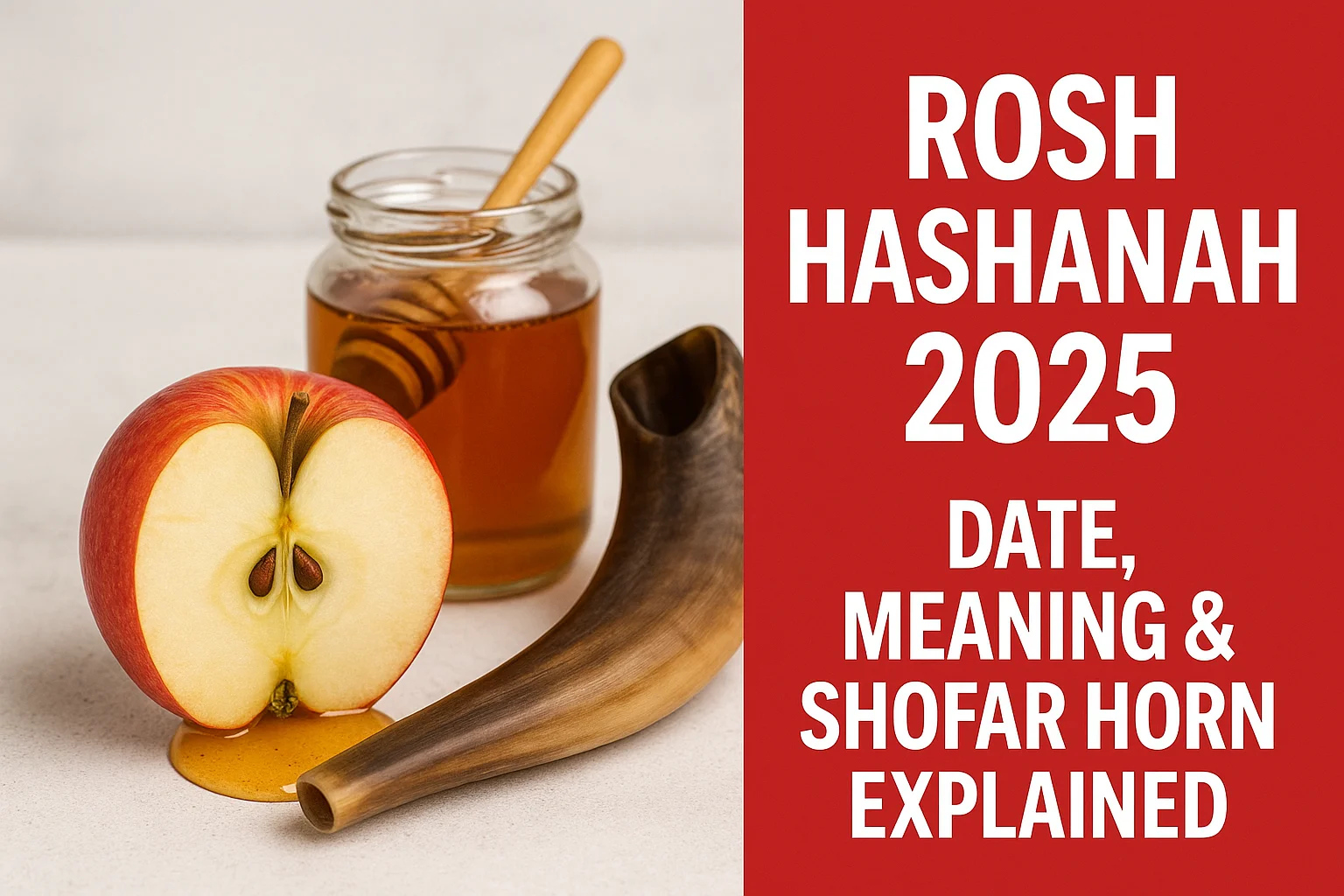
Rosh Hashanah means “Head of the Year” in Hebrew, and it’s more than just a Jewish holiday — it’s a spiritual reset button. Unlike the January 1 New Year’s celebrations filled with fireworks and champagne, Rosh Hashanah is about reflection, prayer, and judgment.
Jews believe that on these days, God writes everyone’s fate in the Book of Life. That’s why it’s also known as the Day of Judgment. The holiday is followed by Yom Kippur, the Day of Atonement, which is the holiest day in Judaism.
Traditions and Symbols
- Shofar Horns: The blowing of the ram’s horn is the most iconic ritual. It’s said to “wake up the soul” and push people to reflect and repent.
- Food: Apples dipped in honey symbolize a sweet year ahead. Pomegranates are eaten for abundance, and round challah bread reminds people of the endless cycle of life.
- Prayers: Long synagogue services focus on forgiveness, renewal, and blessings for the year ahead.
What Do You Say on Rosh Hashanah
Yes, you can wish someone “Happy Rosh Hashanah.” Other greetings include:
- “Shanah Tovah” → Good Year
- “Shanah Tovah U’Metukah” → A Good and Sweet Year
Is Rosh Hashanah Islamic?
No. It’s a Jewish holiday, not part of Islam. Muslims have their own lunar calendar and holidays.
Does Rosh Hashanah stop Shiva?
Yes. Jewish mourning (Shiva) pauses during major holidays like Rosh Hashanah.
Do Jews and Muslims follow the same calendar?
Not exactly. The Jewish calendar is lunisolar, while the Islamic calendar is purely lunar.
When is Rosh Hashanah 2025?
October 2–4, 2025.
What foods are eaten?
Apples with honey, pomegranates, fish head, and festive dinners.
Rosh Hashanah is not just a holiday, it’s a reminder that every year is a chance to start fresh. The shofar horns, sweet apples, and heartfelt prayers all point toward one message: hope, renewal, and a sweet new year.







2 thoughts on “Rosh Hashanah 2025: Date, Meaning, Greetings & Why the Shofar Still Matters”
Comments are closed.